
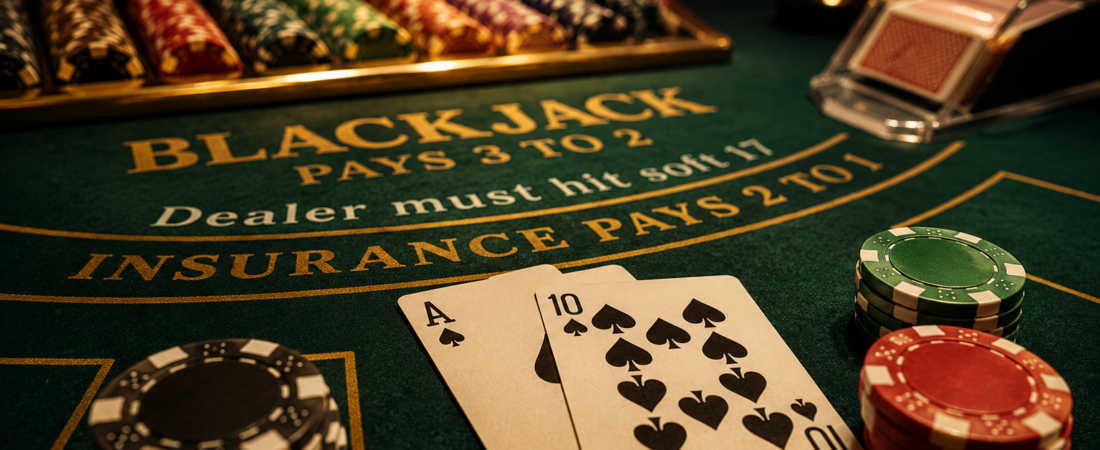
If you’ve ever stood at a blackjack table watching the person next to you split tens (please, never split tens), you already know this game rewards knowledge more than luck. Blackjack has one of the lowest house edges of any casino game — but only if you play it right. Get sloppy with your decisions and that edge balloons fast.
This guide breaks down exactly how to think at the table, without the jargon overload.
Why Blackjack Rewards Strategy
Unlike slots, where every spin is independent and random, blackjack decisions actually change your odds. Every hand you’re dealt has a mathematically “correct” play based on your cards and the dealer’s up-card. Casinos know most players won’t memorize this, which is exactly why the house edge creeps up in practice — even though the game’s theoretical edge can drop below 1% with perfect play.
The Basic Strategy Chart (In Plain English)
You don’t need to memorize a chart overnight. Start with these core rules:
- Always hit on a hard total of 8 or less.
- Always stand on a hard 17 or higher.
- Double down on 11 when the dealer shows anything but an Ace.
- Split Aces and 8s — always. Splitting tens is a classic beginner mistake; a pair of 10s is already a strong 20.
- Never take insurance. It sounds like a safety net, but it’s a side bet that favors the house long-term.
[IMAGE 2 — Suggestion: infographic-style photo of a basic strategy chart or hand of cards being split. Alt text: “Blackjack basic strategy chart showing hit, stand, and split decisions”]
Common Mistakes That Quietly Cost You Money
- Playing on “feel” instead of the numbers. Gut instinct loses to basic strategy over the long run, every time.
- Chasing losses by raising bets emotionally. This has nothing to do with strategy and everything to do with bankroll discipline (more on that below).
- Ignoring table rules. Whether the dealer stands or hits on soft 17, and how many decks are in play, actually shifts the house edge. Look for tables with favorable rules before you sit down.
- Mimicking movie blackjack. Card counting makes for great cinema, but it takes serious practice, isn’t legal to use everywhere, and won’t matter for casual weekend play.
A Simple Bankroll Rule for Blackjack Nights
Set a session budget before you sit down — money you’re fully prepared to lose — and stick to it regardless of how the shoe is running. A common guideline is to bring at least 20 times your average bet size to a session, which gives you enough cushion to ride out normal swings without going bust in the first twenty minutes.
Practice Before You Play for Real Money
Most reputable online casinos and apps offer free-play blackjack tables. Use them. Running through a few hundred practice hands until the basic strategy decisions become automatic will do more for your results than any “system” you’ll find online.
FAQ
Is blackjack the best odds game in a casino? Among common table games, blackjack typically offers one of the lowest house edges when played with correct basic strategy — often under 1%, depending on table rules.
Do I need to count cards to win? No. Basic strategy alone gets you most of the benefit without the practice card counting demands, and it’s legal everywhere the game is offered.
What’s the biggest strategy mistake beginners make? Standing too early on soft hands (like Ace-6) and splitting pairs that shouldn’t be split, like tens.
The Takeaway
Blackjack rewards preparation. Learn the core strategy decisions, set a bankroll before you sit down, and treat the game as entertainment with better-than-average odds — not a way to make money. Play within your limits, and it stays what it should be: fun.
Gambling should always be entertainment, not an income strategy. If it stops feeling fun, that’s worth paying attention to.